
Introduction
Business software has evolved rapidly over the past decade. Companies no longer want tools that are locked to a single machine, nor do they want software that depends entirely on a browser and constant internet connectivity. This shift has led to the rise of SaaS desktop applications—a hybrid model that combines the flexibility of SaaS with the performance and reliability of desktop software.
SaaS desktop applications run locally on a user’s machine but connect seamlessly to cloud services for syncing, updates, subscriptions, and integrations. This approach gives businesses the best of both worlds: fast native performance and the convenience of cloud-based delivery.
At Ostechlabs, we help businesses design and build SaaS + desktop hybrid applications that scale smoothly, update continuously, and adapt to evolving business needs. This article explores why this model is becoming the future of business software and how it benefits modern organizations.
What Are SaaS Desktop Applications?
Understanding the SaaS + Desktop Hybrid Model

SaaS desktop applications are locally installed desktop programs that rely on cloud infrastructure for key services such as authentication, data syncing, updates, and subscription management. Unlike traditional desktop software, they are not isolated systems. At the same time, unlike browser-based SaaS tools, they don’t rely entirely on web technologies for performance.
This hybrid approach allows applications to run quickly and reliably on the user’s device while staying connected to a centralized cloud backend. Updates, feature rollouts, and data access happen seamlessly in the background.
For businesses, this means software that feels fast and stable while remaining flexible, scalable, and always up to date.
Desktop Software with Cloud Intelligence
In SaaS desktop applications, intelligence lives partly in the cloud. Business rules, integrations, analytics, and updates are managed centrally, while the desktop client focuses on delivering a smooth user experience.
This structure enables smarter software without sacrificing performance. Applications can evolve continuously while maintaining a consistent experience across users and devices.
Local Execution with Remote Services
By executing core workflows locally, SaaS desktop applications avoid browser limitations and network latency. At the same time, cloud services handle collaboration, backups, and global accessibility.
This balance makes hybrid applications particularly appealing for teams that need speed, reliability, and flexibility.
Why Hybrid Models Are Gaining Popularity
Businesses increasingly want software that works offline, updates automatically, scales easily, and integrates with other systems. SaaS desktop applications meet all of these requirements, making them a natural evolution of traditional software.
How SaaS Desktop Applications Differ from Traditional Software
One-Time Licenses vs Subscription-Based Models
Traditional desktop software typically relies on one-time licenses. Updates are infrequent, and new features often require paid upgrades. In contrast, SaaS desktop applications use subscription-based pricing, which spreads costs predictably over time.
For SMBs, this lowers upfront investment and makes budgeting easier while ensuring access to continuous improvements.
Manual Updates vs Continuous Delivery
In legacy desktop software, users often delay updates, leading to version fragmentation and security risks. SaaS desktop applications solve this by delivering updates automatically.
New features, performance improvements, and security patches are rolled out continuously without disrupting users or requiring manual installs.
Scalability and User Management
SaaS desktop applications make it easier to add users, manage permissions, and scale usage as businesses grow. Centralized user management simplifies onboarding and reduces administrative overhead.
Why SaaS Desktop Applications Are Ideal for SMBs
Lower Upfront Costs with Subscription Pricing
Subscription-based pricing removes the need for large upfront investments. SMBs can start small and scale usage as their needs grow.
This approach also aligns costs with value, ensuring businesses pay only for what they use.
Pay-as-You-Grow Pricing Models
As teams expand or usage increases, subscriptions can be adjusted easily. This flexibility is especially valuable for growing companies that need adaptable software solutions.
Easier Budget Planning for Small Teams
Predictable monthly or annual pricing simplifies financial planning and avoids unexpected upgrade costs.
Reduced IT Overhead
Automatic updates, cloud-based management, and centralized control reduce the need for in-house IT resources, allowing SMBs to focus on core operations.
Native Performance Without Browser Limitations
Faster Load Times and Responsiveness
Because SaaS desktop applications run locally, they deliver faster startup times and smoother interactions than browser-based tools.
This native performance improves productivity, especially for users who rely on the software throughout the day.
Access to Local Files and System Resources
Desktop applications can interact directly with local files, hardware, and system-level features. This enables richer functionality and smoother workflows.
Improved Stability for Daily Operations
Local execution reduces dependency on constant connectivity, ensuring the software remains usable even during network interruptions.
Key Benefits of SaaS Desktop Applications
Continuous Updates Without User Disruption
Updates happen silently in the background, ensuring all users stay on the latest version. This eliminates version conflicts and improves security.
Rolling Updates and Feature Releases
Features can be released gradually, allowing businesses to adopt improvements smoothly without sudden changes.
Always-On Latest Version Experience
Users always work on the most current version, reducing support complexity and improving consistency.
Cloud Syncing with Local Reliability
Work Offline, Sync When Online
SaaS desktop applications can store data locally and sync it to the cloud once connectivity is restored. This ensures uninterrupted workflows.
Real-Time Data Availability Across Teams
Cloud syncing enables teams to collaborate across locations while maintaining accurate, up-to-date information.
Reduced Dependency on Constant Connectivity
By balancing local execution with cloud services, hybrid apps remain reliable even in low-connectivity environments.
Seamless Third-Party Integrations
Integrating CRMs, ERPs, and Analytics Tools
Cloud-based APIs make it easy to connect SaaS desktop applications with other business systems, enabling unified workflows.
API-Driven Architecture
Modern hybrid apps rely on APIs to enable extensibility and long-term scalability.
Scalable Integration Ecosystem
As business needs grow, new integrations can be added without major rework.
Technical Architecture Behind SaaS Desktop Applications
Hybrid Deployment Architecture
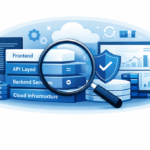
SaaS desktop applications typically use a local client paired with a cloud backend. The client handles UI and local processing, while the backend manages data, logic, and services.
Desktop Client Responsibilities
The desktop client focuses on performance, user interaction, offline capability, and system integration.
Cloud Backend and Service Layers
The cloud backend handles authentication, data syncing, updates, and integrations.
Secure Data Exchange Mechanisms
Secure communication protocols ensure data integrity and privacy between the client and the cloud.
Subscription Management and Licensing
Role-Based Access and User Management
Cloud-based access control simplifies permissions and user management.
Subscription Tiers and Feature Gating
Different subscription levels allow businesses to unlock features as needed.
License Validation and Security
Centralized license validation ensures compliance without disrupting user workflows.
Security in SaaS Desktop Applications
Data Encryption at Rest and in Transit
Strong encryption protects sensitive information both locally and during transmission.
Secure Authentication and Authorization
Modern authentication mechanisms safeguard access across devices.
Compliance and Data Privacy Considerations
Hybrid architecture supports compliance with data protection regulations by balancing local control and cloud governance.
Use Cases Where SaaS Desktop Applications Excel
Across industries, SaaS desktop applications have proven themselves indispensable, especially in scenarios where speed, security, and robust performance are non-negotiable. For sales and operations software, these applications streamline workflows by providing seamless integration with CRM systems and real-time data access—empowering teams to close deals faster and coordinate more effectively. In the realm of financial and accounting tools, SaaS desktop solutions offer advanced analytics, secure data handling, and compliance features that make managing sensitive financial information both safe and straightforward.
Logistics and inventory management are also transformed by SaaS desktop platforms. These tools enable businesses to track shipments, manage stock levels in real time, and optimize supply chain processes without the lag or limitations often found in browser-based alternatives. When it comes to productivity and internal business tools—like project management suites or communication platforms—desktop applications deliver enhanced responsiveness and offline capabilities that keep teams connected even during network interruptions.
Finally, for data-heavy or performance-critical applications such as big data analysis or design software, SaaS desktop solutions provide the computing power necessary to handle complex tasks efficiently. Their ability to leverage local resources while staying connected to cloud updates ensures users always have access to cutting-edge features without sacrificing speed or reliability.
In short, whether you’re managing finances or optimizing logistics operations, SaaS desktop applications offer unmatched advantages for businesses that demand top-tier performance across their most important functions.
How Ostechlabs Builds SaaS Desktop Applications
End-to-End SaaS Product Engineering
At Ostechlabs, we understand that building a successful SaaS desktop application requires more than just great code—it demands a strategic approach to the entire product lifecycle. That’s why our end-to-end SaaS product engineering services are designed to support your vision from the ground up. Whether you’re starting with a minimal viable product (MVP) or planning for an enterprise-ready platform, our team guides you through every critical stage.
MVP to Enterprise-Ready Platforms
Our process begins with thoughtful architecture design, ensuring your application is scalable and secure from day one. We rapidly develop MVPs so you can validate ideas quickly and gather user feedback early in the journey. But we don’t stop there—Ostechlabs specializes in evolving lean products into robust platforms capable of handling enterprise demands.
Scalable Cloud Infrastructure

As your application grows, we provide ongoing support, scaling infrastructure seamlessly while maintaining performance and reliability. Our commitment extends to long-term maintenance, keeping your software ahead of industry trends and security standards.
Maintainable Desktop Codebases
With Ostechlabs as your partner, you gain more than technical expertise—you get a dedicated team invested in turning innovative concepts into thriving SaaS desktop solutions that scale alongside your business ambitions.
Designing for Continuous Delivery and Growth
Seamless Feature Releases
In today’s fast-paced digital landscape, seamless feature releases are not just a luxury—they’re a necessity. By leveraging robust CI/CD pipelines, your team can ensure fast, reliable deployments that keep your product ahead of the curve. These automated pipelines eliminate bottlenecks, reduce human error, and empower developers to deliver new features to users quickly and efficiently.
Performance Monitoring and Optimization
Continuous performance monitoring and optimization are essential to maintaining speed and reliability as your user base grows. With real-time insights into system health and user experience, teams can proactively address issues before they impact customers—ensuring your product remains resilient under pressure.
Long-Term Product Evolution
Most importantly, we design systems with long-term evolution in mind. Our architecture supports graceful scaling and adaptation as business needs change over time. This future-focused approach means you’re not just building for today—you’re setting the stage for sustainable growth tomorrow. With continuous delivery at the core of your strategy, innovation becomes second nature—and lasting success follows naturally.
Common Challenges in SaaS Desktop Applications (and How to Solve Them)
SaaS desktop applications have revolutionized the way businesses operate, but they also come with their own set of challenges. One of the most common issues is ensuring seamless updates without disrupting user workflows. Frequent updates are essential for security and feature enhancements, but poorly managed rollouts can frustrate users. The solution? Implement robust version control systems and offer flexible update scheduling, allowing users to choose when to install new versions.
Another challenge lies in maintaining consistent performance across diverse operating systems and hardware configurations. Unlike web-based apps, desktop applications must account for a wide range of environments. To overcome this, invest in thorough cross-platform testing and leverage frameworks that support multiple OS deployments natively.
Security is a top concern as well—protecting sensitive data on local machines requires advanced encryption protocols and regular vulnerability assessments. By integrating automatic security patches and educating users about safe practices, you can significantly reduce risks.
Finally, user onboarding can be more complex with desktop software due to installation processes or unfamiliar interfaces. Streamline onboarding by providing clear documentation, interactive tutorials, and responsive customer support channels.
By proactively addressing these challenges with thoughtful solutions, SaaS providers can deliver reliable, secure, and user-friendly desktop applications that truly empower their customers.
FAQ: SaaS Desktop Applications
What are SaaS desktop applications?
They are hybrid applications that run locally while using cloud services for updates, subscriptions, and data syncing.
How are they different from web-based SaaS?
They offer better performance, offline capability, and deeper system integration.
Are SaaS desktop applications secure?
Yes, when built with proper encryption, authentication, and secure syncing mechanisms.
Are subscriptions better for SMBs?
They provide predictable costs, easier scaling, and continuous improvements.
Can Ostechlabs build custom SaaS desktop applications?
Yes. Ostechlabs specializes in designing and developing scalable SaaS + desktop hybrid solutions.
Conclusion
SaaS desktop applications represent a powerful evolution in business software. By combining cloud scalability with native desktop performance, they deliver flexibility, reliability, and continuous improvement in a single solution.
For SMBs and growing companies, this hybrid model reduces upfront costs, simplifies updates, and enables long-term scalability without sacrificing user experience.
At Ostechlabs, we help businesses design and build SaaS desktop applications that are ready for growth, built for performance, and designed to evolve with changing needs.
👉 Looking to build a SaaS desktop application? Let’s create something future-ready together.