
The Technical Due Diligence Process for SaaS Companies
When most founders hear the term “due diligence,” they immediately think about financial audits or legal paperwork. But in SaaS, that’s only part of the story.
The real risk and often the real value sits inside the product itself.
That’s why the due diligence process for SaaS companies goes far beyond numbers. It dives into how your product is built, how it behaves under pressure, and whether it can realistically support future growth.
At Ostechlabs, we’ve seen deals move faster or stall completely based on what shows up during technical evaluation. The difference is rarely about perfection. It’s about clarity and preparedness.
Why the Due Diligence Process Matters in SaaS
SaaS companies are fundamentally different from traditional businesses.
You’re not just selling a product. You’re selling a system that needs to scale, remain stable, and evolve continuously.
That means investors are not only asking:
-
- Is this business growing?
-
- They are also asking:
-
- Can this system handle growth?
-
- Can it scale without breaking?
-
- Is the technology maintainable long-term?
The due diligence process answers those questions.
If your system is well-structured and documented, it builds confidence. If it’s unclear or fragile, it introduces hesitation and that hesitation often shows up in valuation discussions.
High-Level System Understanding
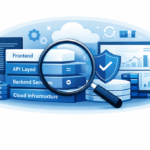
The first step in the due diligence process is not deeply technical. It’s about understanding the system at a high level.
Reviewers typically start with:
-
- Architecture diagrams
-
- Technology stack overview
-
- Hosting and infrastructure setup
-
- Product roadmap
This step sets the tone.
When documentation is clean and structured, it signals discipline. When it’s missing or inconsistent, it raises immediate concerns even before deeper analysis begins.
A clear system overview tells investors that the team understands what they’ve built.
Codebase Review and Maintainability
Once the basics are clear, attention shifts to the codebase.
This is where things get more detailed.
Reviewers are not just looking at whether the product works. They are looking at how it is built.
They evaluate:
-
- Code structure and modularity
-
- Consistency in naming and organization
-
- Test coverage
-
- Dependency management
-
- Version control practices
A well-maintained codebase suggests that future development will be efficient and predictable.
On the other hand, tightly coupled systems, unclear logic, or lack of testing indicate higher long-term risk.
In many cases, the question is not “Does it work?”
It’s “How hard will it be to improve or fix?”
Architecture and Scalability Assessment
This is often one of the most critical parts of the due diligence process.
Your system might work perfectly today but what happens when usage increases?
Reviewers assess:
-
- Database performance under load
-
- API efficiency
-
- System modularity
-
- Cloud infrastructure setup
-
- Load balancing and scaling mechanisms
For SaaS companies, scalability is not optional. It’s expected.
A platform that requires major redesign to support growth becomes a risk. A platform designed to scale gradually builds confidence.
At Ostechlabs, this is something we consider from day one when building platforms like OmniCRM and other scalable SaaS solutions.
Security and Risk Evaluation
Security has become a central part of every due diligence process.
It’s no longer something that can be “fixed later.”
Reviewers look closely at:
-
- Authentication and authorization systems
-
- Data encryption practices
-
- Access control mechanisms
-
- Vulnerability management
-
- Compliance readiness
Even small security gaps can delay deals, especially when enterprise clients are involved.
Strong security practices signal maturity. Weak ones introduce uncertainty.
DevOps and Operational Maturity

How you deploy and manage your product matters just as much as how you build it.
This stage evaluates your operational discipline.
Key areas include:
-
- CI/CD pipelines
-
- Deployment automation
-
- Monitoring and alerting systems
-
- Incident response processes
-
- Backup and recovery mechanisms
Manual deployments or inconsistent release processes often raise red flags.
In contrast, automated and stable pipelines show that your system is reliable under real-world conditions.
Risk Summary and Final Report
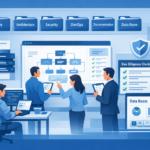
At the end of the due diligence process, everything is brought together into a structured report.
This typically includes:
-
- Identified risks (high, medium, low)
-
- Technical strengths
-
- Areas for improvement
-
- Suggested remediation steps
This report becomes the basis for decision-making.
It doesn’t just highlight problems, it tells a story about the system.
And that story influences how investors move forward.
Why Preparation Makes the Biggest Difference
One of the biggest patterns we’ve seen at Ostechlabs is simple:
Prepared teams move faster.
When companies enter the due diligence process with:
-
- Clear documentation
-
- Known risks
-
- Defined improvement plans
The conversation becomes collaborative.
Without preparation, the same process becomes reactive and stressful.
If you’re planning ahead, it helps to understand how to approach due diligence preparation step by step.
The Bigger Picture
The due diligence process is not just about passing a review.
It’s about understanding your system at a deeper level.
It helps you answer questions like:
Is your architecture future-ready?
Are you carrying unnecessary technical debt?
Can your system support enterprise-level growth?
These are not just investor concerns. They are long-term business concerns.
FAQ
What is the due diligence process in SaaS?
It is a structured evaluation of code, architecture, security, and operations to assess scalability and risk.
Is it only for large companies?
No. Even early-stage startups go through this process during funding.
Can preparation improve outcomes?
Yes. Clear documentation and early risk identification significantly improve investor confidence.